Top 9 Cloud Hosting Providers for 2026
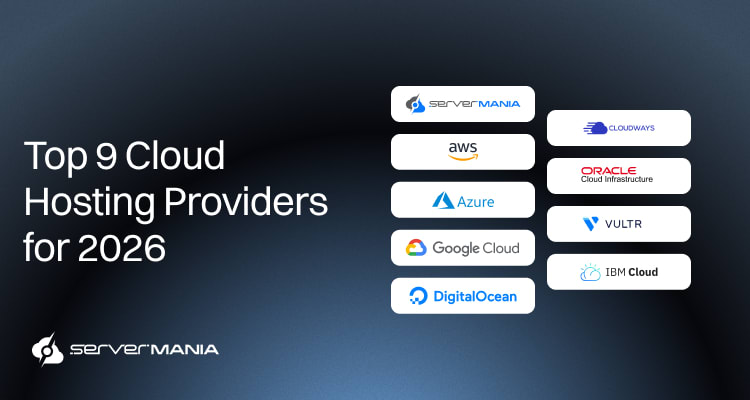
The best cloud hosting services are now at the very center of the modern hosting infrastructure. They support everything from small business projects to large-scale enterprise applications. With the rise of AI and ML, demand is increasingly changing, so hosting providers are enhancing their services to align with customers’ needs and requirements.
By 2026, AI workloads are anticipated to move entirely to the cloud, highlighting the need for providers with dedicated GPU orchestration. Cloud hosting can automatically allocate additional resources during traffic surges, ensuring that websites remain operational.
Cloud hosting can retrieve data from multiple servers when it needs more resources, allowing for exponential growth without switching hosting types. That is what makes them so popular in 2026.
But which are the top 9 cloud hosting services in 2026? Let’s find out…
The 9 Best Cloud Hosting Providers in 2026
We have shortlisted the 9 best cloud hosting solutions for 2026. You will find a short overview of each hosting company, followed by a breakdown of its cloud infrastructure, strengths and weaknesses, and a clear look at pricing and available cloud plans.
This format helps you compare providers side by side and choose the right cloud hosting service based on real operational and technical differences.
1. ServerMania

ServerMania is one of the leading Canadian cloud hosting providers, targeting everything from small businesses, developers, and enterprises alike through its cloud services (AraCloud). They offer multiple data center locations across Canada, North America, and Europe, retaining low latency by keeping their clients close to their customers.
ServerMania also offers dedicated servers, colocation, managed services, and many other solutions tailored for specific client needs. Their cloud server uses NVMe SSD storage for the best performance possible, with completely customizable hardware, spread across multiple tiers to suit any requirement.
| Strengths: | Weaknesses: |
|---|---|
| ServerMania offers a risk-free trial credits to test and scale your infrastructure. | The AraCloud control panel requires basic computing knowledge. |
| 24/7 human support with real engineers and cloud experts. | No ultra-cheap $2 to $3 plans like entry-tier shared hosting. |
| Top-tier data centers in North America, Canada, and Europe. | |
| Up to 10 Gbps networking for high-speed cloud computing power. | |
| Managed cloud hosting plans, free consultations, and guides for beginners. |
Compute, Storage, and Control
ServerMania provides you with full root access, custom compute and storage configuration, and zero restrictions on how you deploy or manage your cloud servers. You choose the operating systems, scale CPU and RAM on demand, and run isolated workloads.
Infrastructure and Networking
AraCloud runs on AMD EPYC processors with enterprise NVMe SSD storage and 10 Gbps networking for low latency and high throughput. This infrastructure delivers strong processing power and stable performance for databases, SaaS platforms, and traffic-heavy servers across multiple data centers.
The architecture uses AI-ready clustered cloud infrastructure to reduce downtime, protect website data, and support continuous availability for online businesses that depend on consistent uptime.
Security, Uptime, and Protection
ServerMania offers compliance with SOC 1, SOC 2, HIPAA, PCI, ISO 27001, and HITRUST certifications for top-tier data protection. Server includes a dedicated IP address, firewall, automated backups, and snapshot recovery. Your data is safe with ServerMania.
ServerMania Pricing & Plans
ServerMania’s cloud platform supports unlimited and dynamic scalability and fully-fledged tiered plans. Their tiered plans include Compute, Flex, Memory, and Storage to match every different workload, covering everything from small static websites to high-traffic platforms and heavy apps.
The lowest price point you can start with is the Compute cloud tier, starting at $27.79/mo with 2 CPU cores, 4 GB of memory, and 50 GB of NVMe SSD storage. You will be paying $0.027116/hour per month. On the high end, you can reach up to $1,021.19/mo for their top enterprise-grade cloud configurations.
Here are a few examples of ServerMania cloud tiers:
| Tier: | CPU: | RAM: | Storage: | Bandwidth: | Price/mo: |
|---|---|---|---|---|---|
| Compute | 2 vCPU | 4 GB | 50 GB NVMe SSD | 4 TB | $27.79 |
| Compute | 4 vCPU | 8 GB | 150 GB NVMe SSD | 5 TB | $49.58 |
| Flex | 4 vCPU | 16 GB | 200 GB NVMe SSD | 6 TB | $78.58 |
| Memory | 4 vCPU | 32 GB | 120 GB NVMe SSD | 4 TB | $125.04 |
| Storage | 4 vCPU | 32 GB | 600 GB NVMe SSD | 6 TB | $138.50 |
ℹ️ The Importance of 24/7/365 Support
Responsive 24/7/365 customer support is essential when choosing a cloud hosting provider, especially if you are a beginner. Premium support from AWS, Azure, and GCP typically requires a paid support plan for 24/7 technical assistance, whereas ServerMania offers a 24/7 team of engineers at your disposal.
2. Amazon Web Services (AWS)

AWS is one of the largest web hosting providers and a dominant cloud provider for enterprises, SaaS platforms, and global applications. It delivers a catalog of cloud services, advanced automation, and deep control over cloud infrastructure, but requires strong technical knowledge to manage efficiently.
AWS offers unmatched scale, performance, and a vast array of more than 200 services, making it the best overall for complex apps. They power everything from cloud startups to multinational platforms using (IaaS) infrastructure as a service models, cloud server hosting, and very advanced networking.
| Strengths: | Weaknesses: |
|---|---|
| AWS offers an industry-leading cloud infrastructure model. | The pricing structure could be too complex for most beginners. |
| Global network of multiple data centers for the lowest possible latency. | AWS could become expensive at scale for growing organizations. |
| AWS offers a wide range of tools for enterprises and small businesses. | The learning curve with AWS is quite steep compared to other providers. |
| AWS offers optimized cloud automation and APIs | Premium support is paid, while free support could be slow. |
Compute, Storage, and Control
AWS provides full root access to virtual private server instances through EC2, flexible cloud hosting plans, and full control over CPU, memory, storage, and operating systems. Most users deploy Linux or Windows servers, configure their autoscaling groups, and allocate dedicated resources per workload.
Infrastructure and Networking
AWS operates one of the largest global networks of web servers, edge locations, and server locations. They support high-bandwidth connections, advanced routing, private networking, and multi-region failover for applications running on multiple servers. Like most cloud hosting services, they offer tools to improve server and site speed, such as caching and content delivery networks (CDNs).
Security, Uptime, and Protection
AWS includes advanced firewalls, DDoS mitigation, encryption, identity management, and compliance across regulated industries. Cloud hosting plans include features like daily backups, SSL certification, and DDoS protection for enhanced security.
AWS Pricing & Plans
AWS offers pay-as-you-go or a flat rate plans. A pay-as-you-go pricing model allows for billing based on exact usage, while flat monthly plans offer predictability. Pricing depends on your region, selected OS, EBS storage, bandwidth, and billing model (On-Demand, Reserved, Savings).
AWS entry-level EC2 instances start around $5 to $10 per month for basic configurations, with costs rising quickly as you add storage, bandwidth, and managed services. Cloud hosting pricing can range from as low as $5 to over $400 per month, depending on all the features and the resources included.
| Tier: | CPU: | RAM: | Storage: | Estimated $/mo: |
|---|---|---|---|---|
| General Purpose t3.small | 2 vCPU | 2 GB | 50 GB | ~$25 /mo (estimate) |
| General Purpose t3.medium | 2 vCPU | 4 GB | 80 GB | ~$50 /mo (estimate) |
| Compute Optimized c6g.large | 2 vCPU | 4 GB | 100 GB | ~$60 /mo (estimate) |
| Memory Optimized r6g.large | 2 vCPU | 16 GB | 100 GB | ~$90 /mo (estimate) |
| Storage Optimized i3.large | 2 vCPU | 8 GB | NVMe | ~$100 /mo (estimate) |
ℹ️ What is Uptime?
Uptime measures how much time your website spends online, which is essential for maintaining traffic and trust. The industry standard for regular web hosting is 99.9% uptime, meaning that server issues shouldn’t shut your site down for more than 10 minutes per week. Cloud hosting services often promise 99.99% or 100% uptime due to the use of multiple servers.
3. Microsoft Azure

Microsoft Azure is one of the leading hosting companies, focusing on large organizations, enterprises, and massive projects. Their range of cloud services is optimized for strong compliance and demanding applications, integrated with Active Directory and Windows Server.
Microsoft Azure is best for enterprise-level organizations, especially those that have heavily invested in the Microsoft ecosystem, and offers superior hybrid cloud capabilities.
| Strengths: | Weaknesses: |
|---|---|
| Azure integrates deeply with Microsoft enterprise software. | The pricing structure is complex for new users. |
| Strong hybrid cloud and private cloud capabilities. | Monthly costs increase fast at enterprise scale. |
| Large global network of enterprise-grade data centers. | The control panel feels crowded and technical. |
| High compliance standards for regulated industries worldwide. | |
| Reliable performance for large distributed cloud applications. |
Compute, Storage, and Control
Microsoft Azure provides customers with complete control over their virtual private server. They offer control over hardware resources like CPU, RAM, and Storage through several cloud plans. Users can deploy multiple operating systems and control services through PowerShell to allocate dedicated resources whenever needed.
Infrastructure and Networking
Microsoft Azure runs on a global cloud infrastructure hosted by Microsoft. There are thousands of web servers in many different regions for minimal latency. Azure cloud hosting allows your site to retrieve data from multiple servers when it needs more resources.
Security, Uptime, and Protection
Since a cloud hosting service should provide at least three layers of security, with Azure, you’ve got everything necessary. Azure includes DDoS protection, identity management, encryption, role-based access control, and compliance programs for regulated industries.
Uptime is critical for cloud hosting, as downtime can lead to lost traffic and revenue. Microsoft Azure guarantees 99% uptime, ensuring that websites remain accessible to users.
ℹ️ Did You Know?
Many cloud hosting providers offer a money-back guarantee, allowing users to try the service risk-free. It’s often limited either by time or by resources, typically enough to fully test their control panel, explore their services, and test their systems.
Microsoft Azure Pricing & Plans
Microsoft Azure groups VMs into VPS plan families (General Purpose, Compute, Memory, etc.) with different CPU and RAM blends. You choose based on workload.
The virtual machines of Microsoft Azure start at $6 to $8 per month for the most basic configurations. The cost, however, increases as you start scaling, pair your service with managed services, upgrade your cloud space, or overuse your bandwidth utilization.
| Plan Tier: | vCPU: | RAM: | Storage: | Est. Price/month: |
|---|---|---|---|---|
| General Purpose B2s v2 | 2 | 4 GB | EBS-style | ~$25 /mo (very entry) |
| General Purpose D2s v3 | 2 | 8 GB | Local temp + disk | ~$75 /mo (balanced) |
| Compute F4s v2 | 4 | 8 GB | Local temp + disk | ~$110 /mo (compute) |
| Memory E4s v3 | 4 | 32 GB | Local temp + disk | ~$160 /mo (memory) |
| Storage/Families L8s v3 | 8 | 64 GB | High I/O storage | ~$455 /mo (storage opt) |
ℹ️ What are Scalable Resources?
Many cloud hosting providers offer scalable resources, allowing users to easily upgrade their plans as their website grows. This means that resources will be automatically added to your service when your prjects requires them and deducted when you don’t use them.
4. Google Cloud Platform (GCP)

Google’s Cloud Platform (GCP) is a large cloud hosting provider, focusing mainly on companies with very data-intensive applications. Some of them include AI and ML. GCP offers cloud hosting services with great container support, high availability, and in-depth integration with the global Google network.
Google Cloud Platform is recognized as the premier choice for data analytics, machine learning, and Kubernetes. GCP is mostly used for cloud server hosting that can manage intensive applications, which makes it a great alternative to dedicated servers.
| Strengths: | Weaknesses: |
|---|---|
| Excellent platform for data analytics, ML, and AI workloads. | The interface is confusing for first-time users. |
| Fast global network optimized for cross-region traffic. | Smaller ecosystem than AWS for third-party tools. |
| Strong Kubernetes and container orchestration support. | Fewer beginner-friendly tutorials and guides are available. |
| High-performance virtual machines with modern hardware. | |
| Competitive pricing for sustained long-term workloads. |
Compute, Storage, and Control
GCP offers end-to-end root access, completely unlimited to all of its virtual private servers. They have flexible hosting plans that offer control over hardware resources, with NVMe storage for performance. They offer freedom to deploy multiple operating systems and assign as many dedicated resources as needed to handle even the most demanding projects.
Infrastructure and Networking
GCP runs on Google’s private network by using its advanced cloud infrastructure across global server locations and edge nodes. Google Cloud’s private fiber network often results in faster data transfers between regions compared to its competitors.
This network supports the heaviest deployments, even with multiple servers. They all have built-in load balancing for high-traffic sources and web servers.
Security, Uptime, and Protection
Google’s cloud platform has a default, built-in protection through encryption. They often advertise the default firewall rules, enhanced DDoS protection, and how they protect sensitive website data. With GCP, your data is surely protected by layers of security.
GCE Pricing & Plans
GCP billing is pay-as-you-go and is based on usage. They are popular for offering many discounts, and according to many users, this makes it sustainable.
Google Compute Engine instances start at roughly $6 to $8 per month for basic configurations, with pricing increasing based on CPU type, memory, storage, and network usage.
| Plan Tier: | vCPU: | RAM: | Typical Storage: | Est. Price/month: |
|---|---|---|---|---|
| e2-medium | 2 | 4 GB | 50 GB SSD | ~$28 /mo |
| n2-standard-2 | 2 | 8 GB | 100 GB SSD | ~$65 /mo |
| c2-standard-4 (compute) | 4 | 16 GB | 100 GB SSD | ~$150 /mo |
| m1-ultramem-40 (memory) | 40 | 961 GB | 500 GB SSD | ~$2,500 /mo |
| n2-d-standard-8 (storage) | 8 | 32 GB | 500 GB SSD | ~$320 /mo |
ℹ️ What is NVMe SSD Storage?
Cloud hosting typically uses SSD or NVMe storage for faster performance compared to traditional HDD storage. NVMe plugs directly into the motherboard, using PCIE slot, bypassing the limitations of SATA HDDs and SSDs. Learn more about NVMe.
5. DigitalOcean

DigitalOcean mainly focuses on developers for quick cloud hosting deployments, with an infrastructure that is kept simple with fast setup. Most of their customers are startups, SaaS product firms, and small teams, even individual developers who need a test environment or a place to start growing their service.
DigitalOcean is known for transparent, flat-rate pricing and an intuitive interface aimed at developers. It is widely used for VPS hosting, app testing, API backends, and many scalable production environments.
| Strengths: | Weaknesses: |
|---|---|
| Simple interface designed for developers and small teams. | Limited enterprise compliance and advanced governance tools. |
| Transparent flat-rate pricing across most hosting plans. | Fewer global data centers than hyperscale providers. |
| Fast deployment with one-click application templates. | Limited managed services for complex infrastructures. |
| Strong documentation and an active developer community support. | Not ideal for large regulated enterprise workloads. |
| Reliable performance on modern cloud server hardware. | Smaller service ecosystem than AWS or Azure. |
Compute, Storage, and Control
DigitalOcean names its services a bit differently. While they also provide full root access, their virtual private server instances are called “Droplets“. Users can deploy the Linux operating system, configure networking, and then manage their server through a control panel.
Their cloud hosting services often include a user-friendly control panel for easy management of the websites and resources. It’s a perfect solution for developers.
Infrastructure and Networking
Their platform works on a global network of web servers, and many regional server locations are being used for low-latency. They fully support vertical scaling, and their load balancing features prevent any over-provisioning, keeping your costs balanced.
Both DigitalOcean and Vultr both offer transparent monthly or hourly billing, making budgeting easier compared to larger providers.
Security, Uptime, and Protection
DigitalOcean uses firewalls, DDoS mitigation, and private networks paired with encrypted storage for ultimate protection. They also offer automated backups.
Digital Ocean Pricing & Plans
DigitalOcean Droplets start at around $5 per month for basic configurations with SSD storage and 1 GB RAM. However, assigning more dedicated resources can quickly spike the monthly price accordingly.
| Plan Tier: | vCPU: | RAM: | Storage: | Price/month: |
|---|---|---|---|---|
| Basic Droplet | 2 | 4 GB | 80 GB SSD | $24 |
| Standard Droplet | 2 | 8 GB | 160 GB SSD | $48 |
| General Purpose | 4 | 16 GB | 100 GB SSD | $120 |
| CPU Optimized | 4 | 32 GB | 100 GB SSD | $180 |
| Memory Optimized | 8 | 64 GB | 100 GB SSD | $320 |
ℹ️ Shared Hosting vs Cloud Providers
With shared hosting, your website runs on one server with hundreds of other sites, sharing the same CPU, memory, and storage. With cloud hosting, your site runs across multiple servers, giving you dedicated resources, better performance, and higher reliability. Cloud hosting provides better uptime, speed, and reliability than regular shared web hosting.
6. Cloudways

Cloudways is a cloud hosting provider built on a layered system backed by platforms of several other cloud providers. Essentially, they are a “reseller” and do not own their own data centers or hardware. They work with providers like Google Cloud, Digital Ocean, Linode, and Vultr, while improving their service by adding automation, managed services, and support.
Cloudways targets everything from enterprises to small online businesses and individuals by offering a wide range of customizable options. Cloudways is regarded as the best for managed cloud hosting, simplifying setups over AWS, GCP, and DigitalOcean infrastructure.
| Strengths: | Weaknesses: |
|---|---|
| A reseller, allowing users to find exactly what they need through multiple providers. | It does not own servers or independent data centers. |
| A lot of additional support addons, suiting a wide variety of projects. | Cloudways offers less control over low-level server settings. |
| Built-in backups, staging, and performance monitoring tools. | The cost is typically higher than working with the actual providers. |
| Optimized environments for WordPress sites and applications. | |
| The user interface is easy-to-work with, ideal for beginners. |
Note: Managed services from providers like Cloudways and SiteGround include hands-on managed support in their base price.
Compute, Storage, and Control
Cloudways gives you full access to CPU, RAM, and storage sizing through its control panel, while the underlying cloud infrastructure is supplied by AWS, Google Cloud, DigitalOcean, Linode, or Vultr. You choose cloud hosting plans based on your needs and let Cloudways handle server setup and patching.
Infrastructure and Networking
Because Cloudways builds on other major hosting providers, it benefits from their networks, multiple data centers, and scalable architecture. You can deploy across multiple servers for load balancing and growth without managing networking directly.
In short, Cloudways allows users to choose from leading cloud infrastructure providers like AWS and Google Cloud to find the best solution for their project.
Security, Uptime, and Protection
Cloudways includes platform-level firewalls, automated backups, SSL certificates, and DDoS mitigation. It supports encrypted storage and secure access to protect website data on underlying cloud networks.
Cloudways Pricing & Plans
Their server types include three major sections: Basic, General Purpose, and CPU Optimized, each of which offers different level tiers. This model allows users to get the level of performance they require without overspending or overprovisioning.
Cloudways plans typically start around $14 to $20 per month for basic configurations, depending on your chosen infrastructure partner. On the high-end, you can reach up to $967 per month, based on the provider you choose and the server type.
7. Oracle Cloud Infrastructure (OCI)

Oracle Cloud Infrastructure (OCI) is a cloud platform focusing on enterprise-grade hosting, built for HPS computing, AI, ML, and databases. OCI offers cloud hosting solutions with competitive pricing, strong network infrastructure, and VM environments made to handle critical apps and sensitive data.
Oracle positions OCI as a cost-efficient alternative to hyperscalers while delivering modern cloud infrastructure, global reach, and enterprise security.
| Strengths: | Weaknesses: |
|---|---|
| Aggressive pricing for high-performance cloud resources. | Much smaller ecosystem than AWS or Azure platforms. |
| Strong performance for databases and backend workloads. | The interface feels technical for new users and beginners. |
| Flat network pricing model across most regions. | |
| Enterprise-grade compliance and security certifications. | |
| Reliable platform for large corporate deployments. |
Compute, Storage, and Control
OCI’s cloud web hosting service provides full root access, flexible cloud hosting packages, and in-depth control over the hardware. Users can deploy Windows and Linux operating systems, manage virtual private server instances, and allocate dedicated resources for production workloads.
Infrastructure and Networking
OCI operates a growing global network of data center regions and high-capacity links optimized for low latency. It supports horizontal scaling across multiple servers and high-throughput workloads such as analytics platforms and transaction systems.
Security, Uptime, and Protection
The powerful cloud hosting of Oracle Cloud includes encryption by default, firewall policies, identity management, DDoS mitigation, and compliance programs for finance and healthcare. This makes the service suitable for critical applications and sensitive data.
Oracle Cloud Pricing & Plans
Oracle Cloud offers a free trial and an intuitive control panel for configuration, dynamically calculating your server cost per hour and per month. The lowest price point is as low as $3.59 for basic servers, and as high as $1000+ for their most powerful servers.
They have no tiers. They have a control panel for server management configuration:
| License | RAM | CPU: | Storage: | Price: |
|---|---|---|---|---|
| Linux | 2 GB/per vCore | 1/2 cores | 5 GB NVMe | $3.59 |
| Linux | 4 GB/per vCore | 4 cores | 50 GB NVMe | $41.88 |
| Windows | 4 GB/per vCore | 4 cores | 50 GB NVMe | $70.59 |
| Linux | 4 GB/per vCore | 16 cores | 150 GB NVMe | $161.53 |
| Linux | 4 GB/per vCore | 48 cores | 1 TB NVMe | $550.38 |
ℹ️ Why Website Speed Matters
Site speed is how long it takes your website to load, and faster loading times lead to lower bounce rates. The longer your website loads, the more visitors you lose.
8. Vultr

Vultr is the right cloud hosting service for developers, built for fast deployments, predictable pricing, and direct control over the SaaS infrastructure. It’s most appealing among website owners who quickly outgrow the traditional hosting services or shared managed web hosting on a single physical server.
It focuses on raw cloud server hosting rather than bundled consumer web hosting services. It’s ideal for website creation (WordPress sites, testing sites, transferring data, website builders), and much more, with just a few clicks.
| Strengths: | Weaknesses: |
|---|---|
| Flat monthly pricing with simple resource scaling. | No managed hosting or server administration. |
| Fast deployment from a global data center network. | No domain registration or free domain offers. |
| Full root access and multiple OS options. | Users handle server maintenance themselves. |
| Good performance for small and mid workloads. | Limited enterprise compliance tooling. |
| One-click app marketplace including WordPress. | Smaller ecosystem than hyperscalers. |
Compute, Storage, and Control
Vultr provides full control over CPU, RAM, and disk for each virtual private server. You manage your own stack, firewall rules, updates, and scaling. They lean towards GPU hosting plans, splitting them into 3 categories that match distinct requirements.
For instance, you can install WordPress from the marketplace during deployment and launch production servers quickly from preconfigured images.
Infrastructure and Networking
Vultr operates multiple global locations across North America, Europe, and Asia with very high-speed networking and SSD-based cloud servers. You can deploy workloads across multiple servers to support traffic growth and regional redundancy.
Cloud hosting allows websites to retrieve data from multiple servers, ensuring consistent uptime even if one server goes down.
Security, Uptime, and Protection
Vultr includes network firewalls, strong DDoS mitigation, private networking, and snapshot backup. You remain responsible for OS updates, patches, and long-term server maintenance.
Vultr Pricing & Plans
Vultr entry compute instances start around $12 per month for basic configurations and scale based on CPU, memory, and storage. On the high end, you can surpass $400 per month, of course, based on the dedicated resources of your server.
9. IBM Cloud

IBM Cloud is an enterprise-grade cloud hosting provider focused on many regulated industries, hybrid deployments, and mission-critical workloads.
It combines public cloud hosting services with strong private cloud and on-prem integration, making it suitable for banks, healthcare organizations, and large corporate IT teams. It is primarily used for cloud server hosting, legacy modernization, and secure enterprise projects.
| Strengths: | Weaknesses: |
|---|---|
| Strong hybrid and private cloud enterprise integration. | Smaller public cloud ecosystem than major hyperscalers. |
| High compliance coverage for regulated industries worldwide. | Interface feels complex for small development teams. |
| Bare metal and virtual cloud servers are available. | Fewer modern developer tools and integrations. |
| Free tier, allowing you to create an account and test 40+ services at no charge. | |
| Strong focus on security and governance frameworks. |
Compute, Storage, and Control
As expected, IBM Cloud offers root access to all of its virtual private servers. What’s unique is that they also provide bare metal cloud servers, which allow detailed CPU, memory, and storage configurations. On the software side, they offer Linux and Windows, while the dedicated resources can be managed through their enterprise-grade automation tools.
Infrastructure and Networking
IBM Cloud operates in several global data center regions and provides private connectivity for hybrid and multi-region architectures. It supports scaling applications across multiple servers and secure connectivity to on-prem environments.
Security, Uptime, and Protection
IBM Cloud emphasizes enterprise security, identity management, encryption, and full compliance for regulated environments. They feature all the required security measures for critical workloads and data.
IBM Cloud Pricing & Plans
IBM offers multiple payment methods, including pay-as-you-go, enterprise saving plans, IBM Cloud Reservations, and Subscriptions and Commitments. While they don’t have outlined tiered plans, there are numerous ways to optimize your payments.
IBM Cloud entry virtual server instances typically start at around $40 to $60 per month for small configurations, depending on region and storage.
Top 9 Cloud Hosting Solutions in 2026: Decision Framework
Each of the providers we’ve reviewed has its strengths and weaknesses. We’ve mapped all of them to their strongest real-world use case, so you can quickly find the right cloud hosting service.
This table gives you a fast, side-by-side view of the best cloud platforms in 2026:
| Provider: | Best for: |
|---|---|
| ServerMania | Best for Price Predictability and Expert Support |
| AWS | Best for a Variety of Available Unique Services |
| Microsoft Azure | Best for Enterprise Ecosystem Integration |
| GCP | Best for Big Data Analytics, AI, and ML |
| DigitalOcean | Best for Individual Developers and Startups |
| Cloudways | Best for Managed PHP Applications |
| Oracle Cloud | Best for High-Performance Databases |
| Vultr | Best for Global Reach on a Budget |
| IBM Cloud | Best for Regulated Industries and Hybrids |
Note: The recommendations in this table reflect typical use cases and platform strengths based on publicly available features and service positioning.
Final Thoughts
After comparing the leading cloud hosting providers in 2026, the real decision comes down to what you value most once the marketing claims are stripped away: performance you can count on, pricing that stays predictable, and a partner that doesn’t disappear when something gets complex.
That’s where AraCloud, powered by ServerMania, stands out. AraCloud delivers the speed and control teams need for real production workloads, without forcing you into a maze of add-ons, confusing billing, or ticket-only support. You get a high-performance cloud built for reliability and day-to-day operations, backed by engineers who can actually help you plan, optimize, and scale.
Hyperscalers like AWS and Microsoft Azure are still strong choices for massive global reach and deep managed-service ecosystems. Google Cloud is a great fit for data-heavy platforms and AI-centric stacks, while DigitalOcean and Vultr remain popular for straightforward deployments and developer-friendly simplicity.
But, if you want cloud infrastructure that feels purpose-built for businesses that need to run fast, stay stable, and grow without billing surprises, AraCloud is the clear choice. A modern cloud with the performance you expect and the support you wish every provider offered.
Was this page helpful?
About the author